Rabby Extension Download: A Practical Comparison of Wallet Security and Cross-Chain Swaps
A common misconception in DeFi is that the safest wallet is simply the one with the most security features. In practice, security depends on the entire transaction path: where the wallet came from, what the browser displays, which permissions have been granted, and whether the user understands the network and contract involved. A wallet can warn about a risky approval yet still be compromised by a fake installation source or a careless signature.
That is why choosing a browser wallet should be treated less like picking a brand and more like comparing operating models. Rabby, a conventional single-chain wallet, and a hardware-wallet workflow can all be reasonable choices, but they optimize for different things. Rabby emphasizes transaction simulation, chain awareness, and a smoother experience across decentralized applications. A traditional wallet may offer familiarity and broad integration. A hardware wallet adds a stronger boundary around private-key use, while often introducing more friction. The right question is not “Which wallet is safest?” but “Which risks does each setup reduce, and which risks remain mine to manage?”
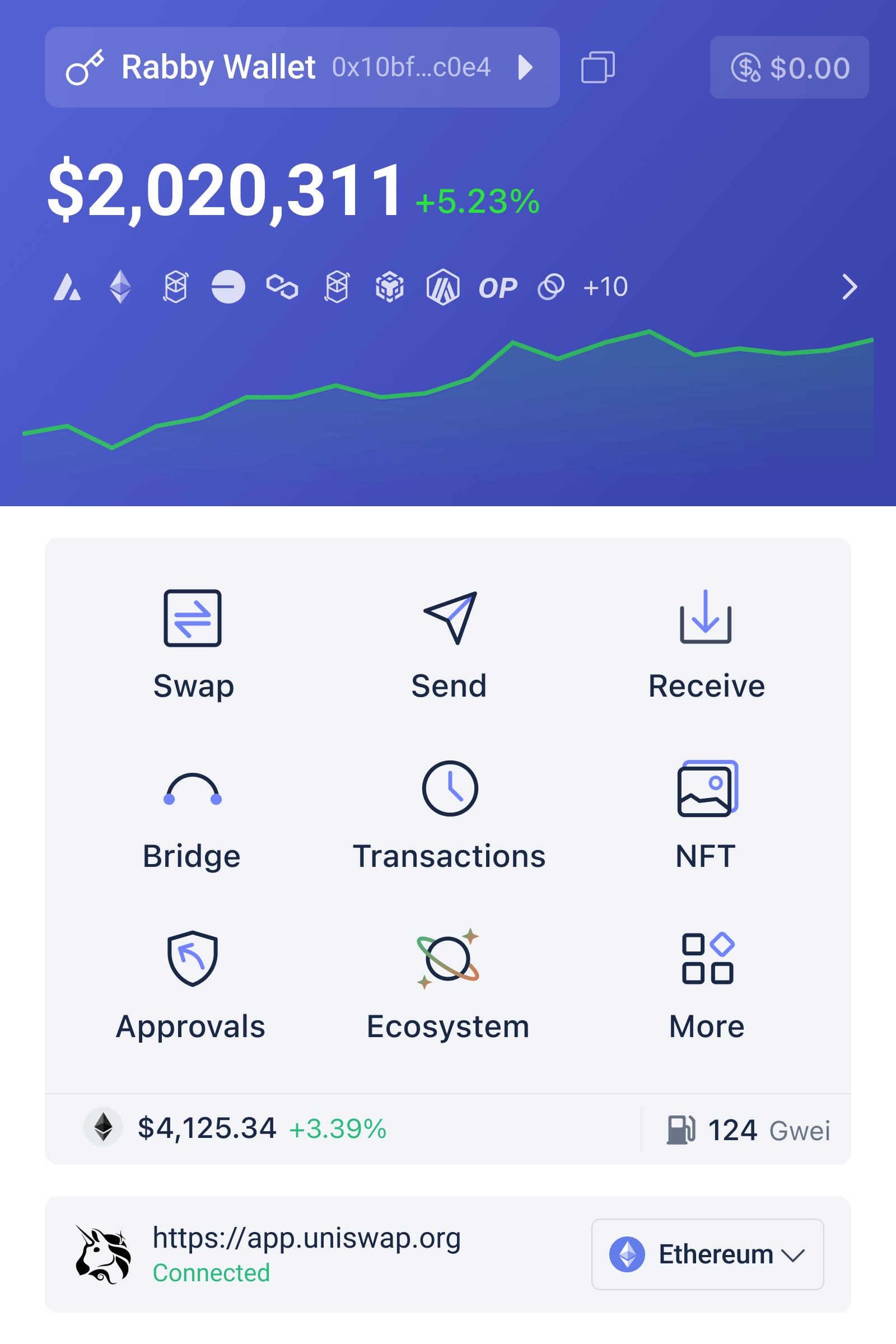
What Rabby Changes in the Wallet Experience
A browser wallet is an interface to a blockchain account. It does not hold coins in the same way a bank holds dollars; the assets remain recorded on their respective networks, while the wallet manages access to the private key and helps construct messages or transactions. When a user connects to a DeFi application, the wallet helps translate an action—such as swapping tokens, supplying collateral, or signing a permit—into something the network can process.
Rabby’s distinctive value is its attempt to make that translation more legible before approval. Its workflow is designed around multiple networks and can present transaction-related information, including the assets involved, estimated changes, and potentially concerning permissions. This is important because many wallet attacks do not require a hacker to steal a seed phrase. A user may instead sign a malicious approval, authorize an unexpected operator, or interact with a counterfeit application.
That does not make transaction simulation a guarantee. A simulation is an estimate of what a transaction would do under particular conditions. Smart contracts can depend on changing prices, liquidity, block timing, external calls, or state that shifts between simulation and execution. A helpful warning system reduces cognitive load; it does not remove the need for judgment. The sharper mental model is “risk-aware display,” not “automatic safety.”
Three Wallet Setups, Three Different Trade-Offs
Rabby for active, multi-chain DeFi
Rabby is most compelling for users who regularly move among Ethereum-compatible networks and decentralized applications. A chain-aware interface can reduce a common operational mistake: signing on the wrong network or sending an asset to an address that cannot use it on the intended chain. When a wallet recognizes connected applications, tokens, and network context, it can make the transaction environment easier to inspect.
The trade-off is complexity. Cross-chain DeFi exposes users to bridges, wrapped assets, liquidity pools, slippage, relayers, and differing fee markets. A wallet can organize these details, but it cannot make them economically equivalent. A token with the same ticker may represent different contracts on different networks. A cheap transaction may still be poor value if the route has thin liquidity or exposes the trader to substantial price impact.
A conventional browser wallet for familiarity and broad compatibility
A more traditional browser wallet may be the better fit for someone who uses a small number of established applications and values a familiar interface. Simplicity can be a security benefit when it helps a user recognize normal behavior. It may also offer compatibility with applications that assume a particular wallet provider.
Its limitation is that familiarity can conceal risk. Many users learn to click through connection prompts without distinguishing a harmless account connection from a token approval or a signature that authorizes future activity. If the interface provides less context, the user may need to inspect contract addresses, allowance requests, and network details manually. Broad compatibility is useful, but compatibility is not the same as informed consent.
A hardware wallet for stronger key isolation
A hardware wallet keeps key operations in a separate device, creating an important barrier between a compromised computer or browser and the private key. This is particularly valuable for long-term holdings or accounts that should not be used for experimental DeFi. It does not prevent a user from signing a malicious transaction, however. If the device displays limited information or the user approves an unfamiliar contract, key isolation cannot correct the decision.
Hardware signing also introduces friction. Address verification, device access, and application compatibility can slow down time-sensitive trades. For many users, the strongest arrangement is not choosing between a browser wallet and hardware storage, but separating roles: a smaller “hot” account for routine DeFi and a hardware-protected account for funds that should rarely move.
Installing a Wallet Is Part of the Security Model
The installation step deserves more attention than it usually receives. A fake extension can imitate the name, icon, and basic appearance of a legitimate wallet while capturing a recovery phrase or redirecting transactions. Users should begin from a trusted official source, verify the publisher and browser permissions, and avoid downloading wallet software from advertisements, unsolicited messages, or random search results. For a guided starting point, review the rabby extension download information before installing.
During setup, the recovery phrase is the real root of control. It should never be entered into a website, sent to support, stored in a cloud note, or photographed casually. Anyone with the phrase can generally control the account, regardless of how polished the extension looks. A password protects access to the local wallet installation; it does not replace the recovery phrase and does not repair a leaked one.
For US users, another practical boundary is the separation between wallet security and regulatory or tax questions. A wallet may help execute a swap, but it does not determine whether the transaction creates a reporting obligation, whether a token is appropriate for a particular account, or whether a DeFi service is available in a user’s jurisdiction. Security, compliance, and investment risk overlap in practice, but they are distinct questions.
Cross-Chain Swaps: Convenience With Hidden Variables
“Cross-chain swap” can describe several mechanisms. A user might trade on one network, use a bridge to move value to another, or use a routing service that coordinates assets and liquidity across networks. These paths may involve a smart contract on each chain, a bridge or messaging system, and a provider that supplies liquidity or completes the destination transaction.
The user-facing action can look like one swap, but the risk surface may contain several independent components. There is contract risk on the source chain, contract risk on the destination chain, bridge or messaging risk, liquidity risk, and execution risk. If a route fails partway through, the result may not resemble a simple “transaction reverted.” Funds could arrive later, remain in an intermediate form, or require a recovery process defined by the application.
Wallet warnings are useful here because they can expose expected token changes and approvals before signing. Yet they cannot answer every economic question. A route with low quoted fees may have high slippage. A route with a favorable price may rely on a thin pool. A bridge may be technically reputable but still expose the user to delays or changing confirmation requirements. Before approving, compare the received amount, minimum output, network fee, approval scope, and whether the destination token is the intended contract.
A reusable decision rule is to separate three checks. First, ask whether the application and domain are authentic. Second, ask what authority the transaction grants—one-time transfer, token approval, permit, or broader contract interaction. Third, ask whether the economic outcome is acceptable after fees, slippage, and bridge conditions. Passing the first check does not imply passing the other two.
Where Rabby Helps—and Where It Cannot
Rabby-style transaction context is most valuable at the point where human attention normally fails: just before signing. It can help users notice an unexpected network, an unfamiliar contract, an unusual asset balance change, or a suspicious approval. This is a meaningful improvement over treating every wallet prompt as a binary “confirm” button.
Still, the wallet is not an independent auditor of every protocol. Simulations may be incomplete, warnings can be misunderstood, and a legitimate-looking transaction can become harmful if market conditions change. Smart contracts may also behave differently when called through a sequence of transactions rather than in isolation. The safest workflow therefore combines wallet tooling with operational discipline: use separate accounts, limit approvals where practical, review domains carefully, and test unfamiliar routes with an amount whose loss would be tolerable.
The strongest setup is usually layered. Use a reputable wallet interface for visibility, a hardware device for meaningful reserves, a dedicated low-balance account for experimentation, and a written process for checking contracts and approvals. This may feel slower than signing everything from one account, but it converts one catastrophic failure mode into several smaller, more manageable ones.
What to Watch Next
As DeFi becomes more multi-chain, the central usability challenge will not be merely adding more networks. It will be representing a transaction that crosses several systems without hiding the dependencies between them. Wallets that can explain not only “what will change” but also “which component is responsible for each change” could materially improve user decisions.
That progress should be judged by fewer misunderstood approvals and clearer recovery paths, not by the number of supported chains alone. If cross-chain interfaces become more automated, the value of transparent simulation and explicit risk boundaries will increase. Automation reduces clicks; it does not eliminate responsibility. Users will still need to know when an apparently convenient route is actually a bundle of contracts, bridges, and liquidity assumptions.
FAQ
Is Rabby safer than every other browser wallet?
No. Rabby can provide useful transaction context and multi-chain awareness, but safety depends on installation authenticity, recovery-phrase protection, application choice, contract behavior, and the user’s decisions. A hardware wallet may offer stronger private-key isolation, while a simpler wallet may be easier for a narrowly defined use case.
Can a wallet warning guarantee that a cross-chain swap is safe?
No. Warnings and simulations are decision aids, not guarantees. They may not capture changing liquidity, bridge delays, external contract behavior, or market movements between review and execution. Check the route, approvals, minimum output, fees, destination network, and token contract before signing.
Should I use one account for all my DeFi activity?
Usually, separating roles is more resilient. A low-balance account can be used for experimental applications, while long-term holdings remain isolated and preferably hardware-protected. The exact arrangement depends on your activity and risk tolerance, but concentration makes one mistaken signature more consequential.